You lift a gorgeous cast iron pan—enameled or bare—and suddenly wonder, will this actually make weeknight cooking easier or just add more chaos to the sink?
So many of us have searched for that one perfect skillet, only to get stuck between glossy coated pots and rugged, bare iron. If you pick wrong, you risk burnt eggs, endless scrubbing, or a tool that gathers dust in your cupboard. The stakes? Daily comfort or constant frustration, meal after meal.
By the end of this guide, you’ll know exactly when to reach for enameled vs bare cast iron, and why one choice could reshape your kitchen routine from “ehh” to effortless. Ready for a little clarity?
Understanding Enameled And Bare Cast Iron Properties
Ever wondered why some cast iron cookware has that glassy, colored exterior, while others look rugged and matte? Here’s the thing: understanding the core properties of enameled and bare cast iron isn’t just trivia — it decides which pan will actually make your kitchen life easier (or not).
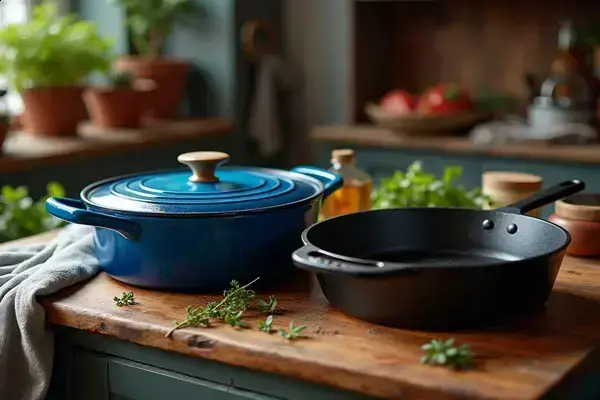
Both materials start with the same heart: heavy, dense cast iron, prized for its superior heat retention and even distribution. But that’s pretty much where their shared DNA ends. What really sets them apart is the outer layer. Enameled cast iron is coated in a layer of vitreous enamel—think of a hardened, glass-like shield—that prevents rust and offers a non-reactive surface. Bare cast iron, though, relies on its natural, seasoned surface for both protection and a unique, evolving patina.
💡 Pro Tip: The key difference? Enameled iron needs virtually zero seasoning; bare iron demands regular seasoning to protect and perform. According to Lodge Cast Iron, failing to season your skillet can lead to frustrating sticking and even rust patches.
Key Properties At A Glance
| Property | Enameled Cast Iron | Bare Cast Iron |
|---|---|---|
| Surface Coating | Glass-like enamel | Natural, develops seasoning |
| Rust Resistance | Very high | Low unless seasoned |
| Reactivity | Non-reactive | Reactive with acidic foods |
| Color Options | Wide (blue, red, crème, etc.) | Traditional black/grey only |
| Weight | Heavier | Heavy, but usually lighter than enameled |
Picture this scenario: You’re searing a steak for dinner. With enameled cast iron, the heat stays consistent, and you won’t worry about acidic marinades eating away at the finish—handy for recipes calling for tomatoes or wine. Bare cast iron, though, gives you that classic sear and gradually builds a natural nonstick layer over time. Purists love it, but it’s unforgiving if you forget to oil it after washing.
The American Culinary Federation emphasizes knowing your cookware’s properties not just for performance, but for longevity. Understanding how each reacts to food acidity, moisture, and heat changes means fewer surprises — and less risk of ruined recipes or ruined pans.
But there’s one detail most owners completely overlook until it’s too late…
How Each Type Performs In Everyday Cooking
So, which pan will actually make your weeknight meals shine — and which one will cause more headaches than it’s worth? Performance in day-to-day cooking is where the rubber really meets the road for both enameled and bare cast iron.
Enameled cast iron tends to excel at simmering, braising, and cooking acidic recipes. That smooth, non-reactive enamel means tomato-heavy stews or citrus-based sauces won’t alter the flavor — or eat away at your seasoning. Bare cast iron, though? It’s the king of high-heat searing, cornbread with a golden crust, and perfectly caramelized onions. But bare iron really dislikes acidic foods and long, wet cook times. You’ll notice stubborn stains, or worse, little spots of rust cropping up if you’re not careful.
💡 Pro Tip: If you want crispy, restaurant-worthy steaks, preheat bare cast iron until it’s screaming hot — according to America’s Test Kitchen, it delivers an unbeatable sear compared to enameled surfaces.
- Heat Retention: Both types keep food warm, but enameled pieces sometimes heat a little slower due to that extra coating.
- Stickiness: Seasoned bare cast iron gets naturally nonstick over time (if you treat it right), while enamel may need extra oil, especially for eggs or pancakes.
- Flavor Memory: Bare iron holds onto flavors — sometimes good, sometimes bad. Enameled doesn’t transfer taste between dishes.
- Broiler & Oven Safety: Most bare iron is safe up to 500°F+, but check your enameled pan’s specs — lower-quality enamel can craze or chip above 400°F.
- Handle Heat: Both types often come with thick, heat-holding handles. Always use mitts; burns are no joke.
In practice: Imagine you’re making beef stew on a chilly Sunday. You brown the meat in a bare cast iron skillet — rich crust, big flavor. But the acid from tomatoes goes straight into an enameled Dutch oven for slow, all-day simmering. The stew tastes bright, not metallic, and your pan’s finish is unharmed.
| Meal Type | Best With | Reason |
|---|---|---|
| Steak/Chops | Bare Cast Iron | Highest searing heat, builds flavor crust |
| Bread Baking | Bare or Enameled | Even, radiant heat for thick crust |
| Tomato Sauce | Enameled | Non-reactive, tangy taste preserved |
| Frying Eggs | Bare (well-seasoned) | Natural nonstick if seasoned; enamel may stick |
| Braises/Stews | Enameled | No metallic taste, easy clean-up |
Picture this scenario: You cook shakshuka in a bare skillet. The eggs stick, the tomatoes stain, and after, your lovely patina is gone. Next time, you use enamel — spotless, stress-free, and the same pan’s ready for dessert after a quick rinse.
And this is exactly where most people make the most common mistake…
Maintenance And Cleaning: What No One Tells You
Just cooked a beautiful, bubbling casserole—or maybe a classic skillet cornbread? Now comes the part most people dread: cleaning. Here’s the thing—enameled and bare cast iron need totally different care, and the consequences for messing up are real.
- Enameled Cast Iron: Usually safe for soapy water and gentle scrubbing. But crack the finish or hit it with steel wool, and you’ll open the door to staining, chips, or eventual rust beneath the enamel. Never plunge hot enameled iron into cold water—temp shock can cause hairline fractures.
- Bare Cast Iron: Soap is controversial, but modern cast iron pros (Lodge and America’s Test Kitchen alike) agree: a little is fine if you re-season after. Never let the skillet air-dry bare. Water equals rust, fast. Always finish with a thin coat of high smoke-point oil.
⚠️ Important Warning: Acidic foods can strip seasoning from bare iron, leaving sticky or patchy spots. Stick to neutral or oily dishes if you want “effortless” cleanup and avoid future sticking disasters.
Step-by-Step: How to Clean Each Type
- Let cool, but not cold: Wipe any crumbs off before washing—this spares both surfaces and nerves.
- Hand-wash only: No dishwashers; the intense heat and detergent are cast iron’s kryptonite (especially for bare).
- Use the right tool: For enameled, a gentle sponge; for bare, a stiff nylon brush or chainmail scrubber—never steel wool unless restoring.
- Dry completely: For bare, heat on the stove till bone dry—then, immediately add a paper-thin layer of oil. Enameled just needs a towel dry, unless you spot raw iron underneath.
- Store uncovered: Never nest with lids on; trapped moisture breeds musty odors—and worse, rust inside rim edges.
In practice: You fry eggs in a bare skillet and go get coffee, planning to clean later. When you return, sticky bits cling for dear life, and the pan is already blotchy. Meanwhile, the enameled pot left soaking is now showing weird discoloration around the rim. Both types reward care—punish neglect.
| Mistake | Likely Consequence | Easy Fix? |
|---|---|---|
| Leaving to soak overnight | Rust (bare) or stains (enamel) | Yes, if caught early and scrubbed |
| No oil after washing bare | Sticky cooking, bare spots | Reseason in oven |
| Cooled too fast (enamel) | Possible chipping and cracks | No—cracks are permanent |
What actually works might surprise you…
Key Pros And Cons To Consider Before Buying
Thinking of adding a new cast iron pan to your kitchen—enameled or bare—and find yourself torn? Deciding between these two is about weighing real-life trade-offs, not just brand names or pretty colors. The right choice can make your weeknight meals easier, but the wrong one could lead to frustration or wasted money.
- Enameled Cast Iron Pros: Rustproof, easy to clean, safe for acidic recipes, comes in gorgeous finishes for stove-to-table serving.
- Enameled Cast Iron Cons: Pricey, heavy (sometimes even more so than bare), prone to chipping if dropped or overheated, can develop stains over time, and sometimes not induction compatible unless noted.
- Bare Cast Iron Pros: Generally more affordable, legendary heat retention for blazing sears, gets more naturally nonstick the longer you use and season it, can last generations with care.
- Bare Cast Iron Cons: Requires seasoning and attentive maintenance, can rust from moisture, reacts badly with acidic foods, limited color options (usually just classic black), and not always dishwasher safe.
💡 Pro Tip: If you want a pan that’s as pretty on the table as it is powerful on the burner, enameled cast iron wins. For rugged grilling, camping, or serious steak nights, nothing beats a well-loved bare cast iron workhorse. According to Cook’s Illustrated, both types outperform aluminum or stainless steel for heat retention—but choosing wrong for your recipes leads to problems fast.
| Criteria | Enameled Cast Iron | Bare Cast Iron |
|---|---|---|
| Price Range | $$$ (Le Creuset, Staub) | $ (Lodge, Victoria) |
| Maintenance | Soap/water, gentle; watch for chips | Seasoning/oiling is a must |
| Best For | Braises, stews, acidic sauces | Searing, baking, frying |
| Downside Risk | Chips/cracks costly to fix | Rust; loses seasoning if neglected |
Picture this scenario: You invest in a high-end enameled Dutch oven, only to crack it the first time it hits a cold water bath. Or you grab a bargain bare skillet but forget to oil it after cleaning—and return days later to find orange specks of rust. Both have their quirks, and you’ll need to pick based on your priorities and habits.
And this is exactly where most people make the most common mistake…
Real-Life Use Cases: Matching Pan To Cooking Style
You’ve read the specs and weighed the pros and cons — but how do these pans really fit into actual cooking routines? The truth is, matching your cast iron cookware to your style is what transforms dinner from stressful to satisfying. It’s less about the hype and more about the reality of your stove, pantry, and favorite tastes.
Which Pan Wins for What?
| Cooking Scenario | Best Match | Why |
|---|---|---|
| Searing Ribeye or Burgers | Bare Cast Iron Skillet | High-heat tolerance, develops a deep crust |
| Baking Crusty Artisan Bread | Enameled Dutch Oven | Moisture retention, non-reactive for doughs |
| One-Pot Tomato Pasta | Enameled Dutch Oven | Safe for acidic sauces, easy cleanup |
| Frying Chicken | Bare Cast Iron Skillet | Stays hot for crispiness, easy oil control |
| Braising Pork Shoulder | Enameled Dutch Oven | Handles long, moist cooking perfectly |
💡 Pro Tip: If your weeknight meals revolve around quick stir-fries or delicate pancakes, you might be happier with a different pan entirely — carbon steel or nonstick. According to Bon Appétit, cast iron isn’t always the answer, but when it is, matching the right type to your recipes is game-changing.
- Quick Dishes After Work: Bare cast iron skillets shine for steak, hash, and cornbread baked straight from stovetop to oven. They’re ready for high heat and fast food with serious flavor.
- Weekend Baking Projects: Love sourdough, boules, or focaccia? Enameled Dutch ovens lock in steam and let crust color nicely, no worries about residual taste from last week’s chili.
- Family-Style Dinners: Make a massive lasagna or stew? Enameled iron makes for impressive table presentations—and handles acidic tomatoes like a champ.
- Backyard BBQs or Camping: Bare skillets dominate for open-flame cooking, grills, firepits, and rustic flavors. Plus, they won’t cry if they get a little beat-up outdoors.
- Meal Preppers: Either pan could work depending on the recipes, but enameled is less fussy about what’s stored in it overnight. Bare iron needs immediate drying and re-oiling every time.
Picture this scenario: On a Saturday, you wake up craving cinnamon rolls. Your enameled Dutch oven delivers golden, pillowy-soft buns for a late brunch. That night, it’s burgers in the bare skillet—charred, juicy, and a crispy crust that only improves with each use. Different pans, same happy kitchen.
The right habits in place now make everything easier from here.
Your Cooking Style, Your Choice
If you take just one thing from this enameled vs bare cast iron guide, let it be: your cookware should fit your real cooking habits, not just the latest trend. Know how each type performs, what it takes to maintain, and what fits your favorite meals.
Maybe before, you wondered if there was a “right” answer and felt lost in a sea of options. Now, you can pick with confidence. You’ll know which pan handles steak, stew, or sourdough best. Easy meals and fewer regrets—because you finally have the know-how to back your decision.
Which cast iron style are you drawn to—and what’s the first thing you’re excited to try? Tell us down in the comments. Can’t wait to hear your kitchen wins!

Blake Aaron Mercer is a cast iron cookware enthusiast and home cook dedicated to helping everyday people get the most out of their skillets, Dutch ovens, and griddles. With years of hands-on experience seasoning, restoring, and cooking with cast iron, Blake built Hnnew to be the honest, practical cast iron resource he always wished existed when he was starting out.