Imagine this: you’re in the kitchen, eager to whip up a homemade meal, but you’re staring at a sea of cookware advice that all sounds Greek. Which cast iron pieces do you truly need to start? It gets confusing—fast.
I’ve lost count of how many beginners get stuck wasting money on pan sets they’ll barely use, or worse, feeling stuck with sticky skillets and regret. No one tells you how easily hefty pots—chosen at random—turn into unused clutter or, sometimes, even kitchen disasters.
By the time you finish reading, you’ll know exactly which pieces from a cast iron set guide beginners should invest in—plus the pitfalls to dodge. Ready to get your kitchen set up right? Let’s dive past the hype and straight into what you actually need.
Why Cast Iron Is Worth Your Attention As A Beginner
Ever wondered why so many passionate cooks — from backyard grillers to Michelin-star chefs — swear by cast iron? It isn’t just because of nostalgia or looks. The truth is, for beginners, cast iron offers a rare mix of resilience, cost-effectiveness, and versatility that you just don’t find in other cookware materials.
Let’s face it: starting your kitchen from scratch can get expensive fast. Stainless, copper, nonstick — the options are endless, and the marketing can be overwhelming. Here’s the thing: one or two well-chosen cast iron pieces often do the job of half a cupboard’s worth of specialized pans, and if you pick right, you’ll buy them once. Then, they’ll last decades.
💡 Pro Tip: According to the Lodge Manufacturing Company, seasoning your cast iron regularly actually improves with every use — turning even a basic skillet into a more nonstick, reliable kitchen staple each week.
Why does cast iron stand out for beginners? For starters, it retains heat better than most cookware, meaning your sear on a steak or crust on cornbread is beautifully uniform. Cleanup isn’t complicated, either, despite all those horror stories you may have read online about rust or fussiness.
Picture this scenario:
You grab a hand-me-down skillet that’s seen better days. After a quick rinse, dry, and swipe of oil, you’re frying eggs for the first time. That slightly uneven surface? It smooths out the more you cook. Fast-forward a month: suddenly, pancakes flip effortlessly and weeknight dinners have that home-cooked flavor you remember from grandma’s kitchen.
| Material | Durability | Upfront Cost |
|---|---|---|
| Cast Iron | Decades (improves with use) | Low to moderate |
| Nonstick Aluminum | 2–5 years (coating wears) | Low |
| Stainless Steel | 10–20 years (depends on quality) | Moderate to high |
The American Culinary Federation recommends cast iron skillets for beginners because they’re more forgiving than you think and develop with you as your skills grow. Sure, there’s a learning curve — but it’s less steep than it sounds, and the payoff is pure flavor.
But there’s one detail most owners completely overlook until it’s too late…
Essential Pieces In A Starter Cast Iron Set
How do you know which cast iron pieces are truly essential for starting out? If you’re picturing an endless set taking over your cabinets, you’re not alone. The secret is simpler: you really only need a few core items to handle almost any basic recipe — whether you’re searing, baking, or slow-cooking.
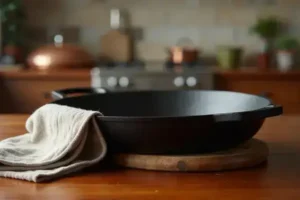
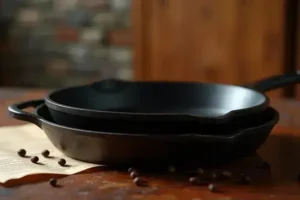
The most versatile and beginner-friendly cast iron item is the classic skillet. You’ll find it in nearly every professional kitchen, and for good reason. It delivers high heat for searing burgers, handles morning pancakes, and even transitions to the oven for cornbread or frittatas. A 10-inch skillet is the gold standard for most home cooks, hitting the sweet spot between portability and capacity.
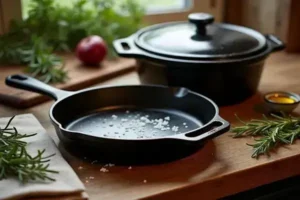
- 10- to 12-inch Cast Iron Skillet — For searing, frying, baking, and roasting nearly anything
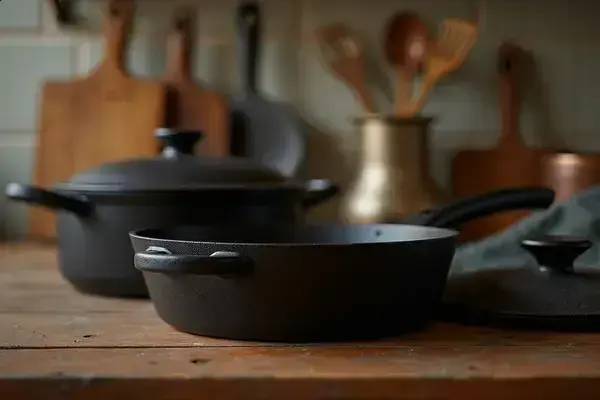
- Cast Iron Dutch Oven (5–7 qt) — Ideal for stews, braises, baking bread, and even deep-frying
- Cast Iron Griddle — Great for pancakes, grilled cheese, quesadillas, and flatbreads; doubles as a stovetop grill
💡 Pro Tip: According to the Culinary Institute of America, a 5-quart Dutch oven is one of the most recommended multi-purpose pieces for beginners, offering capacity while remaining easy to handle for everyday meals.
Picture this scenario: It’s a Saturday night, and you’re craving steak with roasted veggies. Your 10-inch skillet delivers a perfect sear while your Dutch oven roasts root vegetables in the oven below. Neither pan soaks up precious stovetop real estate, yet together, they’ll make a full meal for four — with leftovers.
| Piece | Ideal For | Why Beginners Love It |
|---|---|---|
| 10-inch Skillet | Searing, sautéing, oven baking | Versatile, easy to clean, everyday use |
| Dutch Oven | Braising, baking, soups, stews | Multi-use, handles big batches, oven safe |
| Griddle | Pancakes, sandwiches, fish | Covers two burners, easy for breakfast |
Start with these core pieces and avoid the temptation of one-use novelty shapes. The American Test Kitchen emphasizes that a focused set encourages you to build skill and muscle memory — not clutter. What actually works might surprise you…
How To Pick Quality Cast Iron Without Getting Overwhelmed
Ever stood in an aisle or scrolled online and felt overwhelmed by the sheer number of cast iron brands, finishes, and price tags? You’re far from alone—choosing your first cast iron can feel like a maze of technical jargon mixed with aggressive marketing.
Here’s the thing: picking quality cast iron really boils down to a few key criteria. And honestly, you can spot a great piece in seconds if you know what to look for. Let’s break it down so you don’t have to second-guess yourself (or waste your hard-earned money).
What To Check Before Buying
- Weight and Thickness: Heavier pans usually mean even heat and lasting durability, but they should still feel manageable in your hand.
- Surface Texture: Many traditional pans have a slightly pebbled texture, while “vintage style” brands may offer a smoother finish — either can work; just avoid obvious cracks, warping, or rough, sharp edges.
- Pre-Seasoned vs. Unseasoned: Pre-seasoned pans save you the hassle (they come ready to use), but some purists prefer seasoning from scratch for maximum control.
- Brand Reputation: Lodge (USA), Victoria (Colombia), and Staub (France) are three trusted brands that consistently earn high marks in tests by America’s Test Kitchen.
💡 Pro Tip: According to the James Beard Foundation, avoid cheap cast iron from unknown sources — inconsistent material quality can lead to uneven cooking and frustrating sticking, even after seasoning.
Picture this scenario: You spot two skillets—the bargain-bin brand seems like a deal, but it feels wobbly and the seasoning flakes off with your thumb. The better-known pan is heavier, stable, and passes the “nickel test” (the bottom sits totally flat on the stove). That sense of solidity? That’s what you’re after.
| Feature | Must-Have | Red Flag |
|---|---|---|
| Base Flatness | Does not rock or wobble | Cup-shaped or uneven base |
| Handle | No cracks, steady fit | Loose or rough edges |
| Surface | Uniform dark finish, no bare spots | Rust, bright orange patches |
When in doubt, give yourself permission to slow down and inspect in person, if possible. The American Culinary Federation suggests feeling the pan weight and inspecting the finish as the quickest “first impression” checks.
And this is exactly where most people make the most common mistake…
Building Your Set: Buying New Versus Used And What To Avoid
Here’s a real dilemma: Should you buy brand-new cast iron, or hunt for those classic ‘yard sale treasures’ everyone raves about? Both routes can deliver incredible results—but each has a few pitfalls you’ll want to dodge.
When you buy new, you’re often getting pre-seasoned convenience, warranty support, and the peace of mind that your pan is free of mystery buildup or hidden cracks. Brands like Lodge and Staub, for example, meticulously test for quality and offer customer service if anything ever goes wrong. That’s a big plus for beginners who’d rather skip the trial-and-error phase.
- New: Modern pre-seasoned finish, reliable nonstick, usually ready-to-cook out the box.
- Used: Potential for vintage high-quality iron with a glass-smooth surface, but requires close inspection for chips, rust, or structural defects.
💡 Pro Tip: According to the Smithsonian’s National Museum of American History, many vintage cast iron pieces (like Griswold and Wagner) are prized for lighter weight and buttery-smooth interiors—grabbing one in great shape can mean a lifetime investment.
In practice:
- Decide how much time you’re willing to invest in restoring or maintaining your pan. New is for “grab and cook”; used can be a project, but deeply rewarding.
- When buying used, examine the cooking surface in bright light—flaking, severe rust, or hairline cracks are dealbreakers.
- Flip the pan and check the bottom. It should sit flat (no rocking) and not have deep pitting.
- If possible, run a cloth over the piece. Surface dust or minor rust isn’t a big deal, but if it rubs off in orange streaks, heavy restoration is due.
- For new, check the finish for uniform seasoning and review warranty details from the manufacturer.
| Option | Benefits | Watch Outs |
|---|---|---|
| New | Pre-seasoned, warranty, less risk | Higher upfront cost |
| Used | Cheaper, vintage value | Hidden cracks, restoration needed |
The American Culinary Federation recommends checking for structural integrity and matching your purchase decision to your comfort with restoration projects. But there’s one detail most owners completely overlook until it’s too late…
Caring For Your First Pieces So They Last For Generations
Chances are you want your cast iron to outlast your first apartment—or even your grandkids. But what does it really take to keep these workhorse pans looking and performing great for years, not months? Most beginners worry it’s complicated, but the routine is surprisingly straightforward.
Your first steps will feel awkward—maybe you’re nervous about water, soap, or accidentally wrecking that nonstick surface everyone raves about. The truth is: as long as you follow a few cast-iron-specific habits, your skillet will keep performing like new.
- Clean promptly after cooking: While the pan is still warm (never blazing hot!), wipe it out with a paper towel or soft brush to remove food bits.
- Use hot water if needed: For stuck-on bits, rinse under hot water and gently scrub. Skip the soap and never soak.
- Dry thoroughly: Place on a low burner or in the oven to dry—moisture is the true enemy of seasoning and cast iron longevity.
- Oil lightly after use: Rub a few drops of neutral oil (canola, grapeseed) into the entire surface, including the outside and handle.
- Store with airflow: Don’t trap moisture by sealing the pan in plastic or putting on a tight lid; let it breathe.
⚠️ Important Warning: According to the USDA, rust on cookware doesn’t just look bad—it can affect flavor and, in rare cases, safety. Always dry and oil your cast iron after each use to avoid rust development.
In practice: Picture this scenario—a skillet routinely wiped, dried on the burner, and lightly oiled. Years go by. The surface gets slicker, food rarely sticks, and friends ask if it’s brand new. It isn’t. That’s the magic of consistent care.
| Habit | Why It Matters | Frequency |
|---|---|---|
| Wipe/Dry After Use | Prevents rust | Every use |
| Oil After Cleaning | Keeps seasoning strong | Every use |
| Bake On Seasoning | Restores nonstick | Monthly |
Once this is in place, the rest of the routine falls into place naturally.
Your Cast Iron Kitchen Starts Here
If you take just one thing from this cast iron set guide beginners, let it be: start simple and care for what you have, and great meals will follow. All you really need is a solid skillet, maybe a Dutch oven or griddle, and a habit of quick cleanups. Everything else is extra — and you already know what to look for now.
Before, picking and using cast iron might’ve felt intimidating or confusing. Now? You know how to spot quality, avoid the usual mistakes, and keep your cookware thriving for years. You don’t have to be a pro chef to make this work — you just need a little know-how and some genuine curiosity.
What’s the first recipe you can’t wait to try in your cast iron set? Share your ideas and kitchen wins in the comments below!

Blake Aaron Mercer is a cast iron cookware enthusiast and home cook dedicated to helping everyday people get the most out of their skillets, Dutch ovens, and griddles. With years of hands-on experience seasoning, restoring, and cooking with cast iron, Blake built Hnnew to be the honest, practical cast iron resource he always wished existed when he was starting out.